A used welding robot can be worth it, if the system fits the part and there is real support behind it. Starland Metals, a Minnesota job shop, started in 2020 with one pre-owned CLOOS robot they found online. Today, about 98% of their production runs on automation. Their path wasn’t a big capital bet. It was one system, one problem, and a partner who kept showing up.
Here’s what that journey looked like, and what to check if you’re weighing a used or smaller system yourself.
Why do most shops start small?
In our research, 58.8% of manufacturers take a “start small and expand” approach instead of going after a complex solution on day one (CLOOS 2025 North American Welding Automation Research Study). That matches what we hear from job shops. You rarely have the capital for a large cell, and you rarely have an automation engineer on staff to run one. What you have is a handful of parts that eat up your welders’ time, and a need to get more out of the people you already have.
That’s where brothers Colin and Jadon Decker were. Before automation, Starland relied heavily on manual welding. Their team was skilled, but the strain on operators and the pressure to increase output were building. They didn’t have the luxury of a large capital outlay.
What happened when Starland bought a used robot?
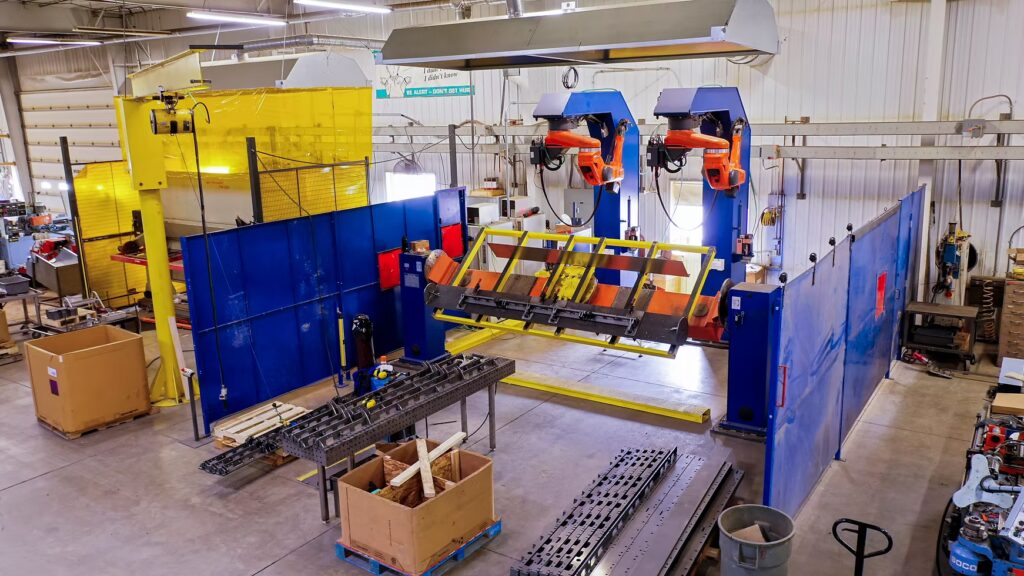
The Deckers found a pre-owned CLOOS robot online in 2020. It was a gamble, and it worked. Even though they bought it used, they still got help from CLOOS with setup, programming, and maintenance.
The first system paid off right away, even though it was used, which made the next one an easier decision.
How did one robot turn into 98% automation?
When it came time to expand, the Deckers chose to standardize on CLOOS for the systems that followed. Most of the robots on their floor are CLOOS today. The reasons they give are practical: reliable equipment, direct service, and responsive support. After frustrating troubleshooting experiences with other vendors, they wanted one company to call.
The results, as Starland reports them:
- About 98% of production now runs on automation.
- Output roughly doubled without growing the labor force.
- Less manual strain on welders and lower turnover among skilled workers.
- Fast support. The Deckers say that when they email CLOOS about a problem, they hear back within the hour.
None of that came from one big decision. It came from a first project that worked, and then a second one that built on it.
What should you check before buying a used welding robot?
Starland is one shop’s story, not a formula. But a used system lives or dies on a handful of questions. Ask them before you talk price.
| CHECK | WHAT TO LOOK FOR | WHAT TO ASK |
| The job it will do | A used robot works best on one specific, repeatable part, not a wish list. | Which part is it for, and how many do you run? |
| Support | A used robot is only as useful as the help behind it. | Who services it, how fast do they respond, and will they stand behind a system they didn’t sell you? |
| Work history, not just age | Two robots of the same age can have very different wear. | What was it used for, and for how long? Can you see it run? |
| Overhauled or rebuilt | The two terms mean different things. | What was actually done to it, and by whom? |
| Parts and software | An older system needs parts and software support for years. | How long will both be available? |
| Warranty | Terms vary widely. | What does it cover, and for how long? |
| Room to grow | A first system that can’t scale means starting over on the second. | Can I add to it without redesigning? |
If you’re not sure which part to start with, start with the parts that get automated first. And single-source accountability matters even more when the machine isn’t new.
What doesn’t a used robot promise?
Used equipment varies. Condition, age, and service history all matter, and no supplier can promise that every pre-owned system will perform like Starland’s. Starland’s experience is one customer’s account of what worked for them. If you’re weighing a used system, ask to see its history and ask who supports it. We’d rather you ask the hard questions up front.
So is a used welding robot worth it?
It can be, when the system fits the part, the support is real, and the platform can grow. Starland started small, and each system made the next decision easier. That’s a more realistic picture of automation than a single giant purchase.
If you’re thinking about a first project, tell us about your part. We’ll tell you straight whether it’s a good candidate, and what a sensible first step looks like. You can also read the full Starland Metals story.
FREQUENTLY ASKED QUESTIONS
Is it worth buying a used welding robot?
It can be, if the system matches your part and you have reliable support behind it. Condition, age, and service history vary, so ask for the system’s history and confirm who will service it before you buy.
What should I check when buying a used welding robot?
Check the job it will do, who will support it, its work history, whether it was overhauled or rebuilt, parts and software availability, warranty terms, and whether it can grow with you.
Should I start with a small welding automation system?
For most shops, yes. In our research, 58.8% of manufacturers start small and expand, which keeps the first investment manageable and lets each project inform the next.
What did Starland Metals start with?
A single pre-owned CLOOS robot, found online in 2020. Today about 98% of their production runs on automation, and most of the robots on their floor are CLOOS systems.
Does CLOOS support used systems?
Starland’s experience is that CLOOS provided help with setup, programming, and maintenance even though they bought their first system used. Support terms for any specific system depend on the machine, so ask us directly.
How do I pick my first automation project?
Start with a specific, repeatable part that takes up a lot of welder time. A narrow first project is easier to justify, easier to run, and points to the second one.
Worth doing right means starting where it makes sense, and building from there.