
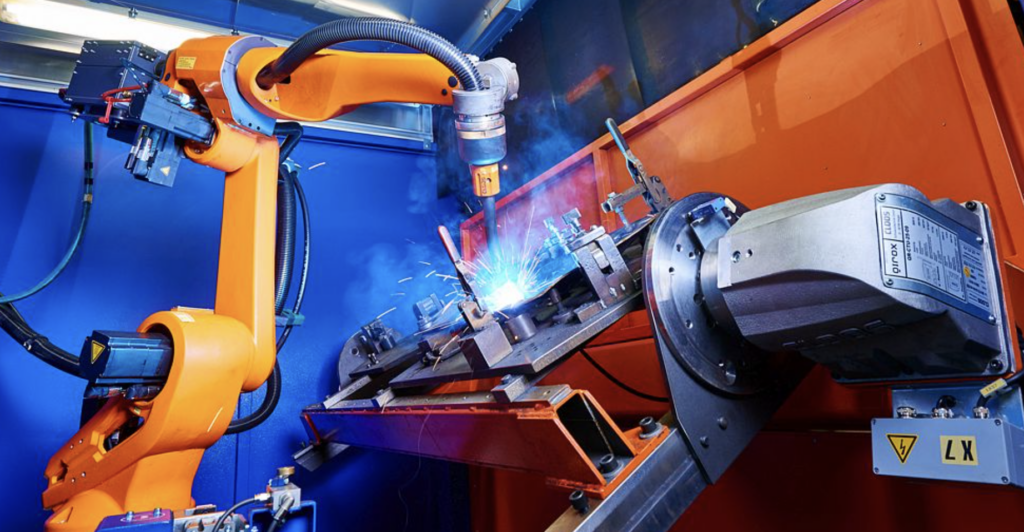
With a single-source system, one company is responsible when something breaks: whoever designed, built, and sold it to you, full stop. That answer gets a lot murkier on a weld cell assembled from multiple vendors. Is it the robot manufacturer, the integrator, the power source supplier, the fixture builder? Each one can point at the others, and every call you make sorting that out is time your line isn’t running.
That’s the real argument for single-source. Problems still happen. The difference is you’re not spending the first hours of downtime figuring out whose problem it is.
The hidden cost of a multi-vendor system
Every additional vendor in a weld cell is another interface where responsibility can get lost. A robot from one company, a positioner from another, a power source from a third, each with its own service contract, its own support line, its own read on whether a given fault is “their” issue. When something goes wrong, you’re troubleshooting more than a machine. You’re troubleshooting who owns which piece of it.
This is invisible on the quote sheet. Nobody prices “hours spent identifying who’s accountable” as a line item, but it’s real, and it compounds every time the system needs attention.
What single-source actually removes
A single-source system means one company designed the robot, the positioner, the controls, and the process together, and stands behind all of it as one unit. No supplier can honestly promise instant repairs, and we won’t pretend otherwise. What it guarantees is simpler: you’re never on a call trying to determine whose fault a problem is before anyone starts solving it. One relationship. One number to call.
That structural clarity is what manufacturers actually say they want. In our research, 71.2% told us they’re looking for a comprehensive partner across the life of the system, not just an equipment seller, and 57.5% specifically prefer direct manufacturer support paired with on-site service rather than piecing that together themselves. It’s a preference for not managing the coordination themselves, not for faster service.
Total Cost of Ownership, Not Just Purchase Price
A cell that’s cheaper to buy because it’s assembled from several vendors can become the more expensive system to own. The individual components aren’t the problem. The coordination burden is, and it falls on you every time something needs attention. Total cost of ownership is everything that happens around the system for the years you run it, not just the purchase price, and accountability is part of that math whether or not it shows up on the initial quote.
Single-source still means downtime when something breaks. It just means you’re not losing the first several hours figuring out who’s supposed to be helping you.
If you’re weighing a custom multi-vendor build against a single-source system, talk to us about how the accountability actually works, not just the spec sheet.
FREQUENTLY ASKED QUESTIONS
Does single-source mean faster repairs?
We wouldn’t claim that, and no supplier honestly can. What it means is clarity: one company designed and stands behind the whole system, so you’re not spending time determining which vendor is responsible before troubleshooting even starts.
Is a multi-vendor system always a bad choice?
No. Sometimes a specific component genuinely is best-in-class from a specialist supplier. The tradeoff is that every additional vendor adds a potential point of ambiguity when something goes wrong, and that cost is worth weighing against the component-level benefit.
What should I ask a single-source supplier before buying?
Ask specifically what “single-source” covers, whether it’s the full system including fixturing and controls, or just the robot with everything else outsourced. The term gets used loosely, and the accountability only holds if the supplier actually built and stands behind everything you’re buying.
Why do manufacturers say they want a comprehensive partner?
Based on our research, most have felt the coordination cost of managing multiple vendors firsthand. It’s not about convenience. It’s about not being the one who has to sort out who’s responsible when something breaks.
Worth doing right means knowing exactly who’s responsible before you ever need to find out the hard way.