
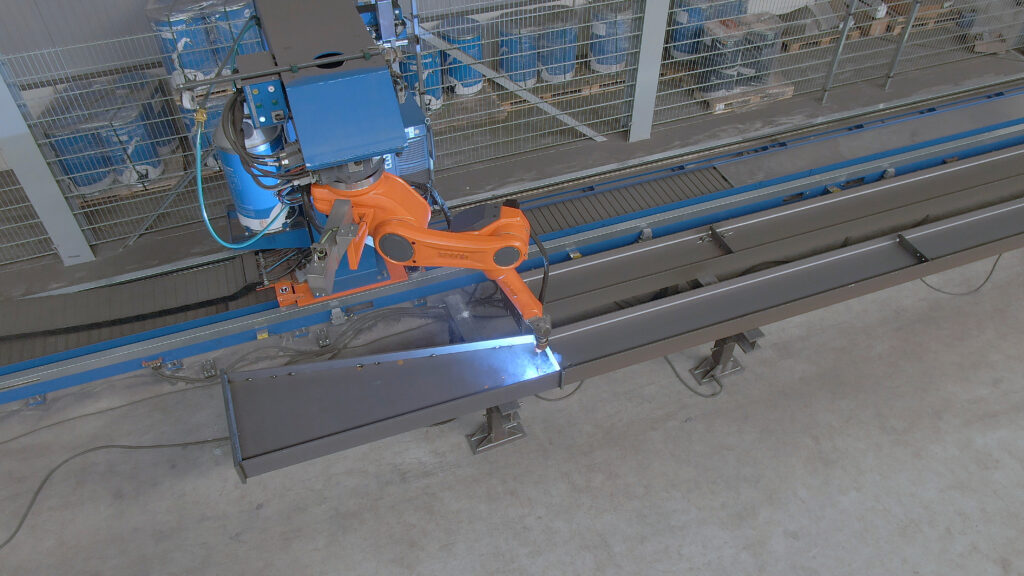
Yes, German welding robots can be well supported in North America, but the reason has nothing to do with where the robot was designed. The real question is whether the company that engineered the system is the same company standing behind it here, or whether support got handed off to a separate reseller who didn’t build any of it. A system engineered overseas and then distributed through a disconnected regional partner is a real risk. A system engineered, manufactured, and serviced by one company with a real team on the ground isn’t the same situation at all, whatever the nameplate says.
Here’s how that distinction actually plays out when you’re the one evaluating a supplier.
The worry is real. The target is usually wrong.
In our research, 18.8% of manufacturers named lead time and support as a real concern when considering an overseas automation supplier. That’s not a small number, and it shouldn’t be waved away with a slogan. But most of that worry gets aimed at the wrong variable. “Where was this built” tells you almost nothing about how fast someone shows up when your line is down. “Who actually owns the support relationship” tells you everything.
A lot of automation on the market gets engineered in one country, manufactured under license in another, and sold through a local distributor who had no hand in designing any of it. That’s the setup that actually produces slow, confused support, not the country of origin on its own.
What vertical integration means for welding robot support
Vertical integration means the same company that designs the welding process also builds the robot, the controls, and the software around it, instead of assembling a system from whatever parts a reseller could source. That matters for support specifically: the people answering your call didn’t inherit documentation from an engineering team overseas, they’re part of the same company that wrote it.
We’ve made the broader case for single-source accountability before, and it still holds: one company responsible for the whole system means no finger-pointing between vendors when something breaks. What’s different here is the geography question specifically. Vertical integration is what makes “German engineering” compatible with real North American support, instead of those being two separate promises that may or may not hold up at the same time.
What it looks like when something actually breaks
This isn’t theoretical. Hyster-Yale ran a rigorous, scored evaluation across vendors on both technical and business criteria before choosing CLOOS, support included. Their verdict: “All the time, CLOOS is the best option.” They weren’t just buying on specs. They were buying confidence that the same team would be there after the sale.
Starland Metals, a Minnesota job shop, put it more specifically. Their experience: setup help, programming help, and maintenance help, often within the hour, from the same company that built the system. That’s one customer’s account, not a guarantee every call resolves that fast, but it’s a direct answer to what “support” actually looks like day to day, not what a brochure claims it looks like.
That’s backed by infrastructure, not just goodwill: a replacement-parts inventory sized for minimal downtime and a support team that gives you one point of contact who already knows your system, instead of a new voice every time you call.
What this doesn’t promise
Equipment built anywhere can fail, and no supplier, single-source or not, can honestly promise zero downtime or instant repairs. Being straight about that matters more than pretending otherwise. What vertical integration changes isn’t whether something ever breaks. It’s who picks up the phone, and whether that person actually understands the system instead of routing you to someone who does.
So are German welding robots well supported in North America?
It depends entirely on whether engineering and support live under the same roof. That’s the question worth asking any overseas supplier, not “where is this made.” Ask who shows up when the system goes down, and whether that’s the same company that built it or a separate partner managing the relationship secondhand.
If you’re weighing suppliers and want to know what that actually looks like day to day, ask us directly. We’d rather answer it straight than have you find out the hard way.
FREQUENTLY ASKED QUESTIONS
Are German welding robots well supported in North America?
It depends on the manufacturer’s structure, not the country of origin. A vertically integrated company that engineers, manufactures, and services the system as one operation can provide strong North American support regardless of where the equipment was designed. A system handed off to a disconnected regional distributor is the actual risk, wherever it’s built.
Is single-source automation better for long-term support?
Generally, yes. Single-source accountability means the company that built your system is also the one responsible for supporting it, so you’re not coordinating between a manufacturer, an integrator, and a separate service provider when something needs attention.
What should I ask an overseas automation supplier about service before I buy?
Ask whether the company that engineered the system also employs the people who’ll service it, or whether support is handled by a separate regional partner. Ask for a direct customer reference about response time, not a stated SLA.
Does vertical integration affect service quality?
Yes. When the same company designs, builds, and services a system, the people answering support calls have direct knowledge of how it was engineered, instead of relying on documentation handed down from a separate manufacturer.
Does CLOOS provide support in North America?
Yes. CLOOS designs and manufactures its welding automation systems and supports them through its North American operation, rather than routing service through an unaffiliated third-party distributor.
Worth doing right means the support holds up after the sale, not just the sales pitch before it.