
A print will show you the dimensions. It’ll show you the tolerances, the material spec, the joint callouts. What it won’t show you is how the part is actually going to behave once heat hits it, whether the fit-up will hold steady from the first piece to the hundredth, or what that specific material does when it’s pushed. None of that is on the drawing. All of it decides whether a weld holds.
That’s the read an experienced welder does before automation ever enters the conversation, and it’s worth understanding even if you never touch a torch yourself, because it’s exactly what separates a cell that runs clean from one that fights you.
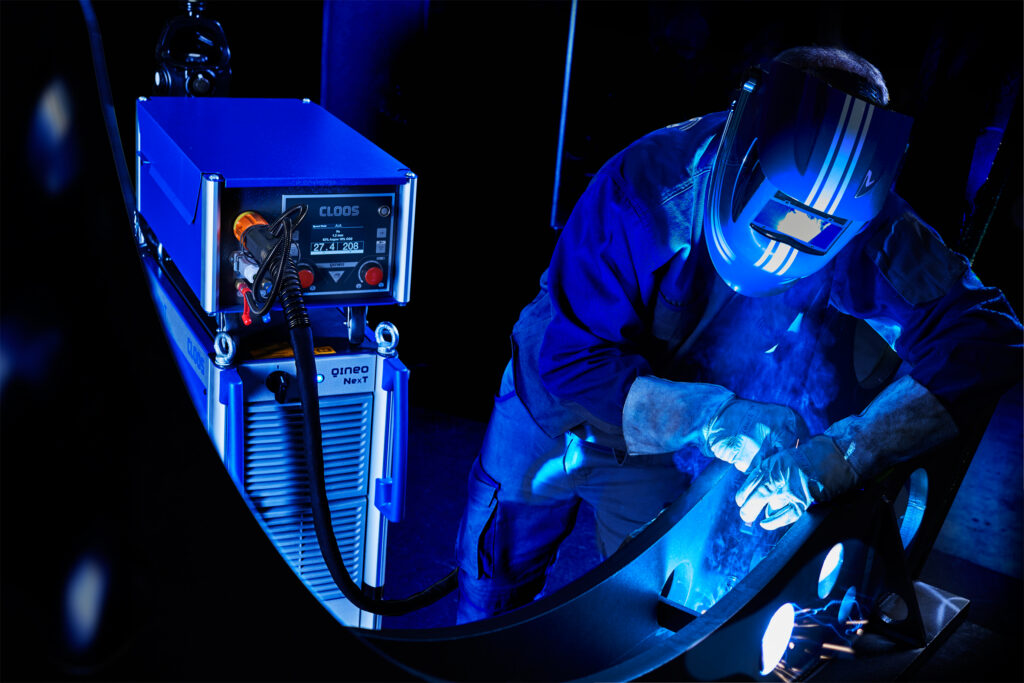
Reading fit-up before it becomes a problem
Anyone can see whether two pieces of metal line up in a photo or on a print. What takes experience is predicting where they won’t, across every part in a run, not just the one you’re looking at. A stamped bracket might hold tight tolerance in the middle of a batch and drift at the start and end, as the tooling wears. A weldment cut from sheet might match the drawing exactly and still vary a few millimeters piece to piece, because of how it was cut or handled upstream.
A welder reads this by asking where variation is likely to hide, not whether today’s sample looks clean. Tolerance stack-up across multiple parts, tooling wear, handling damage before the part ever reaches the cell, all of it shows up as fit-up variation, and none of it is visible on a spec sheet. A robot welds whatever gap is actually in front of it, so catching this before automation begins is the difference between a clean weld and one that’s technically present but structurally weak.
Reading how heat will move
Every material moves under heat, and it moves in a specific, largely predictable way based on thickness, joint design, and weld sequence. Thin sections pull harder than thick ones. A long, continuous weld pulls differently than a series of shorter, stitched passes. Weld the wrong joint first on a multi-joint part and the whole thing can walk out of square before you’re even halfway through.
Predicting this is part memory, part pattern recognition, having seen enough parts distort the same way to know what’s coming before it happens. It’s also exactly why weld sequence matters as much as weld quality. A perfectly executed bead in the wrong order can still leave you with a part that’s out of tolerance.
Reading the material itself
Steel, aluminum, and stainless don’t just weld differently, they behave differently when something’s off. Aluminum moves faster under heat and shows distortion sooner than steel. Stainless holds heat longer and is less forgiving of a slow travel speed. A joint design that works cleanly on mild steel can be a genuine problem on a thinner-gauge aluminum part, not because the process is wrong, but because the material’s behavior wasn’t accounted for.
None of this disqualifies a material or a part. It just means the read has to account for what that specific material actually does, not what welding in general does.
Why this is what you’re actually paying for
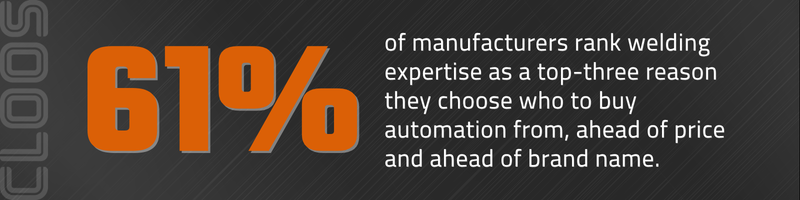
When manufacturers told us what decides who they buy automation from, welding expertise came out on top, ranked in the top three by 61% of respondents, ahead of price and ahead of brand name. This is why. Anyone can sell a robot. Fewer people can look at your actual part, not just its drawing, and tell you honestly what it’s going to do before the first weld ever runs. That read is the real product. The equipment is just how it gets executed.
If you’re evaluating a first automation project, whether your part is a good general candidate is the first question. This is the deeper one: not just whether it qualifies, but what a physical read reveals that the print never could. The tradeoffs between getting that read right and simply keeping a line moving are also worth understanding, and we’ve written about that balance between precision and uptime directly.
The fastest way to get an honest read on your own part is to bring it to us. Not a drawing, the actual part. We’ll walk through what we see, the fit-up, the heat behavior, the material quirks, before you spend anything on a system.
FREQUENTLY ASKED QUESTIONS
Can I tell how a part will weld just by looking at the drawing?
Not fully. A print shows dimensions and tolerances, but it doesn’t show fit-up variation from part to part, how the material will move under heat, or subtle differences between individual pieces. That’s why a physical read on the actual part, not just the drawing, matters before automating it.
Can distortion be predicted before welding starts?
To a real degree, yes. Material thickness, joint design, and weld sequence all influence how a part will move under heat. Experienced welders use that pattern to plan sequence before the first weld runs, not after a part comes out of tolerance.
Does the same joint design work across different materials?
Not always. Aluminum, steel, and stainless respond differently to heat, so a joint that welds cleanly on one material can behave differently on another, even with an identical design.
Why does welding expertise matter more than the robot brand?
Because the robot only executes what it’s told. The judgment about fit-up, sequence, and material behavior happens before automation, and that judgment is what actually determines weld quality.
Worth doing right starts with an honest read, not an assumption.